Poker guide
The history of poker
From a 20-card betting game on Mississippi riverboats to a worldwide game played live, online and on TV: how poker grew up, era by era.
Updated:
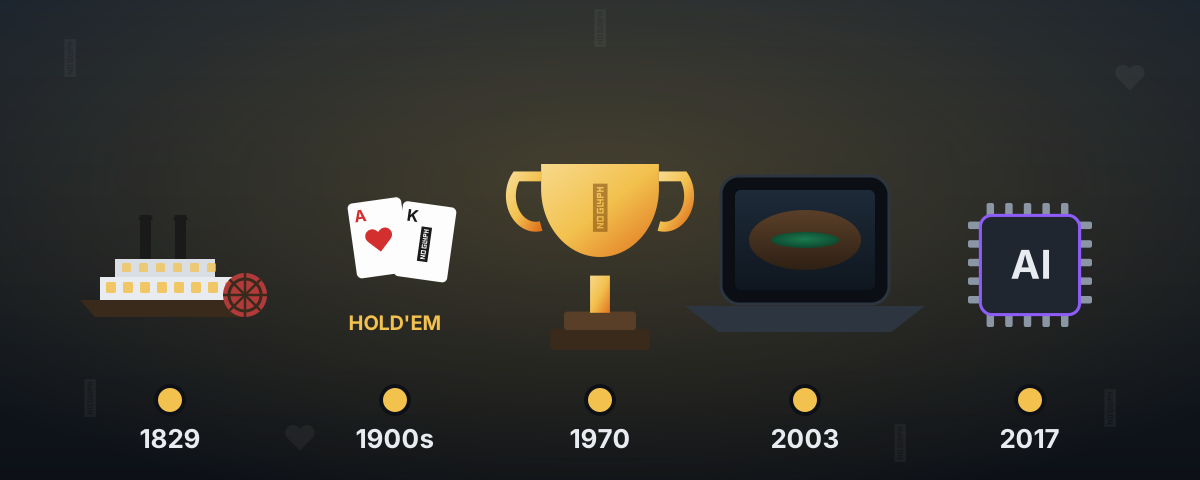
Poker started as a simple betting game on the Mississippi River about 200 years ago. Since then it has crossed the Wild West, moved into Las Vegas casinos, appeared on TV and gone online. Today millions of people play it, from home games to high-roller events in Asia. Here's how it happened, era by era.
Where poker came from
Nobody knows exactly who invented poker. It grew out of older European card games built on the same idea: bet on your hand, and bluff when it's weak.
- Poque, a French betting game. French settlers brought it to New Orleans, and its name is the most likely origin of the word "poker".
- Brag, an English game in which bluffing was the whole point.
- Pochen, a German game with a similar name and similar betting.
Some books also name As-Nas, a Persian game, as poker's ancestor. Most historians now think that link is unlikely.
1800s: the riverboat game

The earliest clear description of poker comes from New Orleans in 1829. English actor Joseph Cowell wrote about a game for four players, each dealt five cards from a 20-card deck (only the aces, kings, queens, jacks and tens). Players bet on who held the best hand. There was no draw, and no flushes or straights yet.
The game spread up the Mississippi and Ohio rivers on paddle steamers, where professional gamblers played the passengers, not always fairly. It then followed the railroads and the gold rush west.
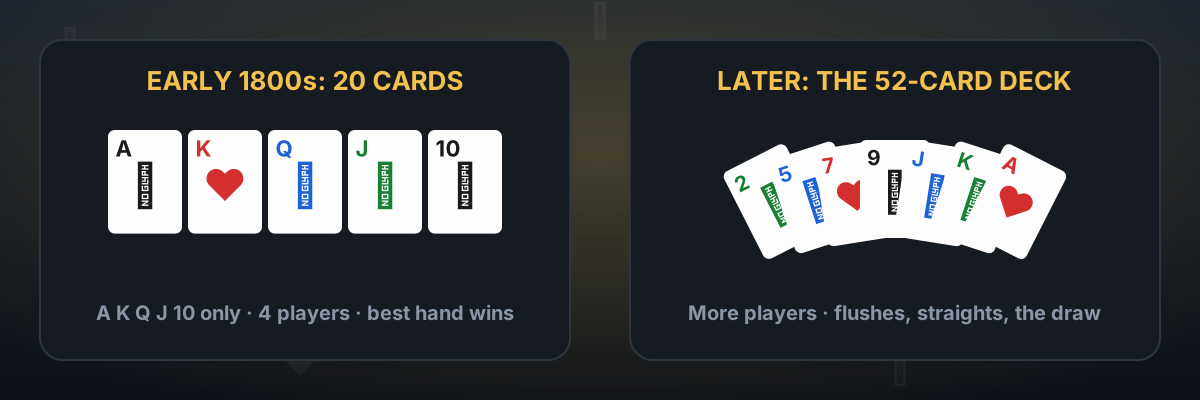
Over the next decades the game grew into the poker we know:
- The 52-card deck replaced the 20-card deck, so more players could join a game.
- The flush and the straight became new hands.
- Draw poker let players swap cards, adding a second round of betting.
- Stud poker, with some cards dealt face up, became popular around the American Civil War (1861–1865).
- Wild cards and the joker appeared later in the 1800s.
Early 1900s: Texas Hold'em is born
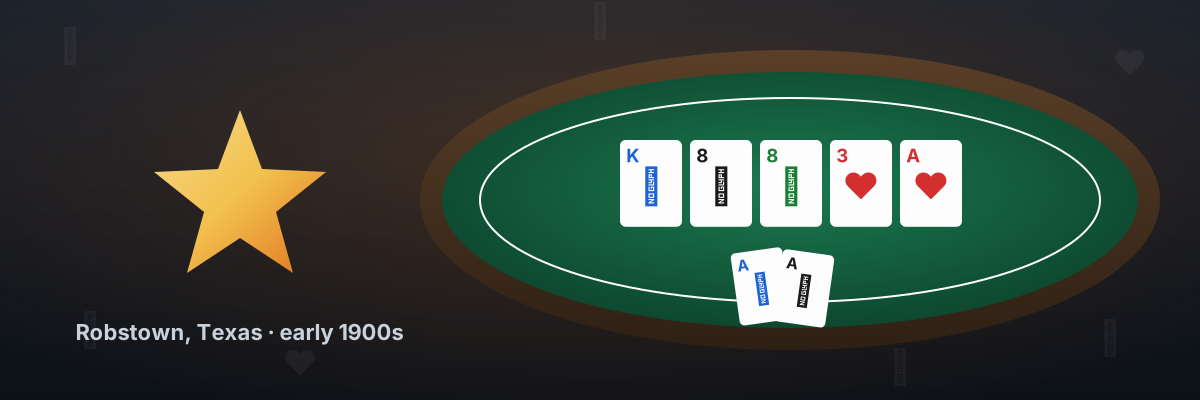
Games with shared community cards appeared in the early 1900s. Texas Hold'em is usually traced to Robstown, Texas, and in 2007 the Texas legislature officially recognised the town as its birthplace.
Hold'em was a Texas game for decades. Texan road gamblers brought it to Las Vegas in the 1960s. There, players found that two private cards and five shared ones made a game of skill, reading and nerve. With no betting limit, one hand could decide everything.
1970: the World Series of Poker

In 1970, casino owner Benny Binion invited the best players to his Horseshoe casino in downtown Las Vegas for the first World Series of Poker. Only a handful of players took part, and the champion, Johnny Moss, was chosen by a vote of the players. From 1971 the Main Event became a freezeout tournament, played until one player had all the chips, with No-Limit Hold'em as the main game.
The Main Event grew slowly for 30 years, to a few hundred players by 2000. It made No-Limit Hold'em "the Cadillac of poker", and turned the winners into stars.
Poker on TV
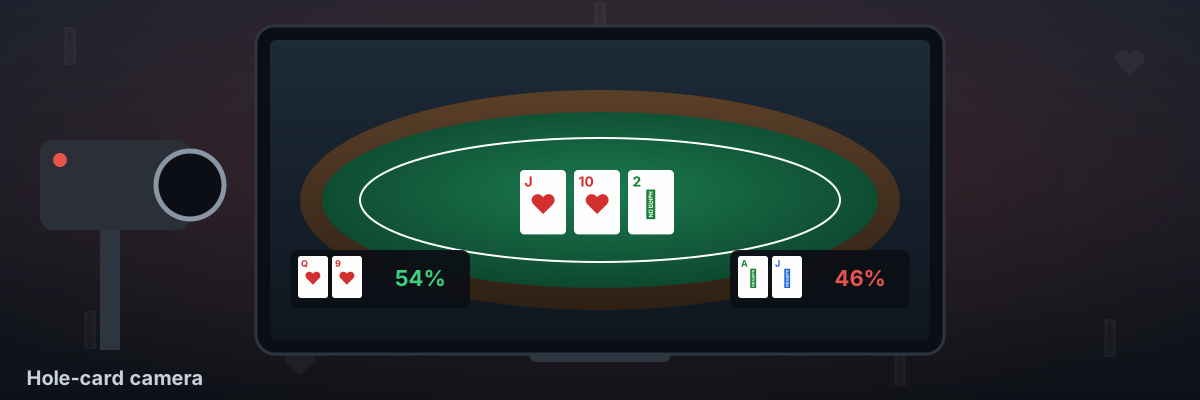
For a long time poker was boring to watch, because viewers couldn't see the cards. That changed with the hole-card camera. The British show Late Night Poker (1999) used cameras under glass in the table, and the World Poker Tour brought the idea to US television in 2003, showing every player's cards and winning chances. Suddenly poker was a drama: viewers knew who was bluffing before the players did.
The 1998 film Rounders, about a law student who plays high-stakes Hold'em, also inspired a generation of players.
1998–2006: the online poker boom
The first real-money online poker game was dealt on Planet Poker on January 1, 1998. More sites followed, and for the first time anyone could play at any hour, for any stake, from home.
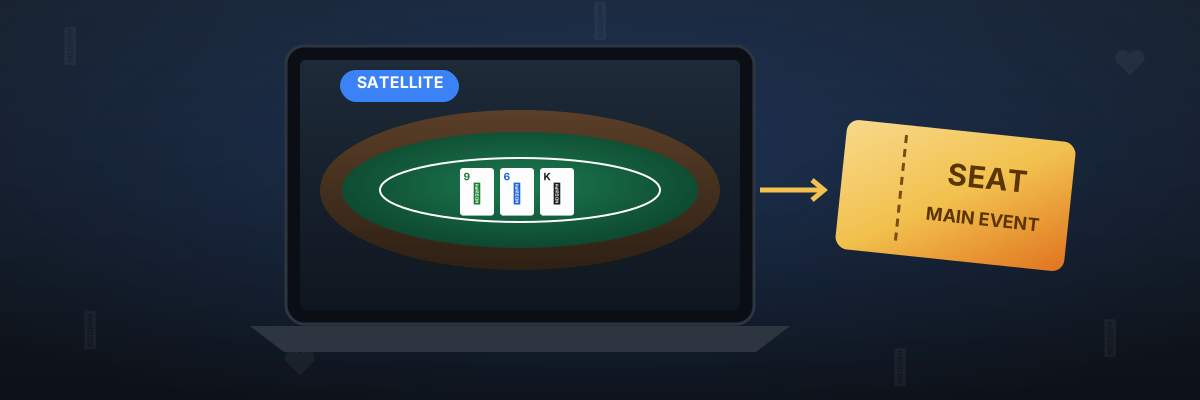
In 2003, an amateur named Chris Moneymaker won a seat to the World Series Main Event in an online satellite that cost less than $100, then won the whole event and $2.5 million. If an accountant from Tennessee could do it, anyone could. This became known as the "Moneymaker effect": the Main Event grew from 839 players in 2003 to 8,773 in 2006.
The boom slowed in the US. A 2006 law (the UIGEA) cut off payments to many sites, and on April 15, 2011, known as "Black Friday", US authorities shut down the biggest sites for US players. Regulated online poker returned state by state, starting with Nevada, New Jersey and Delaware in 2013. Elsewhere, online poker kept growing, with national licences in many European countries.
2010s: solvers and AI

Computers changed how people study poker. Solvers, programs that work out game-theory optimal (GTO) strategy, became common study tools in the 2010s. Players began to talk about ranges, frequencies and balance instead of reads and hunches.
Then the machines started winning. In 2017, the AI Libratus, built at Carnegie Mellon University, beat top professionals at heads-up No-Limit Hold'em. In 2019, Pluribus beat elite players at six-player tables. Online sites now use their own tools to catch players who get help from software during a game.
Poker today
Poker is now truly worldwide:
- Live poker is bigger than ever. The World Series Main Event passed 10,000 players for the first time in 2023, and tours run festivals in Europe, Latin America, Australia and Asia (see our big tournaments calendar).
- Asia is a growth market. There are high-roller series and big festivals in Macau, Korea, the Philippines, Vietnam and Taiwan, and "amusement poker" played for prizes in Japan.
- Online and live work together. Online satellites still send players to the biggest live events. During the 2020 pandemic, even World Series bracelets were played for online.
- Poker is entertainment. Live streams, cash-game shows and vlogs reach millions of viewers (see poker shows).
Timeline
| Year | What happened |
|---|---|
| 1829 | Earliest clear description of poker: four players, 20 cards, New Orleans |
| 1800s | 52-card deck, flushes and straights, draw poker, stud poker and wild cards |
| Early 1900s | Texas Hold'em appears in Texas (Robstown is the official birthplace) |
| 1960s | Hold'em arrives in Las Vegas |
| 1970 | First World Series of Poker at Binion's Horseshoe, Las Vegas |
| 1998 | First real-money online poker game; the film Rounders |
| 1999 | Late Night Poker shows hole cards on TV |
| 2003 | World Poker Tour on US TV; an online qualifier wins the World Series Main Event |
| 2006 | Main Event record of 8,773 players; the UIGEA in the US |
| 2011 | "Black Friday" shuts the biggest online sites for US players |
| 2013 | Regulated online poker in Nevada, New Jersey and Delaware |
| 2017 | The AI Libratus beats top professionals at heads-up No-Limit Hold'em |
| 2019 | The AI Pluribus beats elite players at six-player tables |
| 2020 | World Series bracelet events played online during the pandemic |
| 2023 | World Series Main Event passes 10,000 players for the first time |
Play a piece of history: learn the rules in Poker 101, then try heads-up No-Limit Hold'em, the game of the first World Series, in Heads Up with Legends.
Frequently asked questions
Who invented poker?
Nobody knows for sure. Poker grew out of older European betting games such as the French Poque, the English Brag and the German Pochen. It took shape in New Orleans and on Mississippi riverboats in the early 1800s.
When was poker invented?
The earliest clear description is from New Orleans in 1829: four players, five cards each from a 20-card deck, betting on the best hand.
Where was Texas Hold'em invented?
In Texas in the early 1900s. In 2007 the Texas legislature recognised Robstown, Texas, as the birthplace of Texas Hold'em.
When was the first World Series of Poker?
In 1970, at Binion's Horseshoe casino in Las Vegas. Johnny Moss was voted the first champion; from 1971 the Main Event was a freezeout tournament.
What was the Moneymaker effect?
The poker boom that followed Chris Moneymaker's 2003 World Series Main Event win. He qualified through an online satellite costing less than $100 and won $2.5 million, and the Main Event grew from 839 players in 2003 to 8,773 in 2006.
Can AI beat humans at poker?
Yes. In 2017 the AI Libratus beat top professionals at heads-up No-Limit Hold'em, and in 2019 Pluribus beat elite players at six-player tables.