Poker guide
Cash games & home games
Sit down, buy in, play as long as you like. How cash games work in casinos and online, and how to run a smooth home game with friends.
Updated:
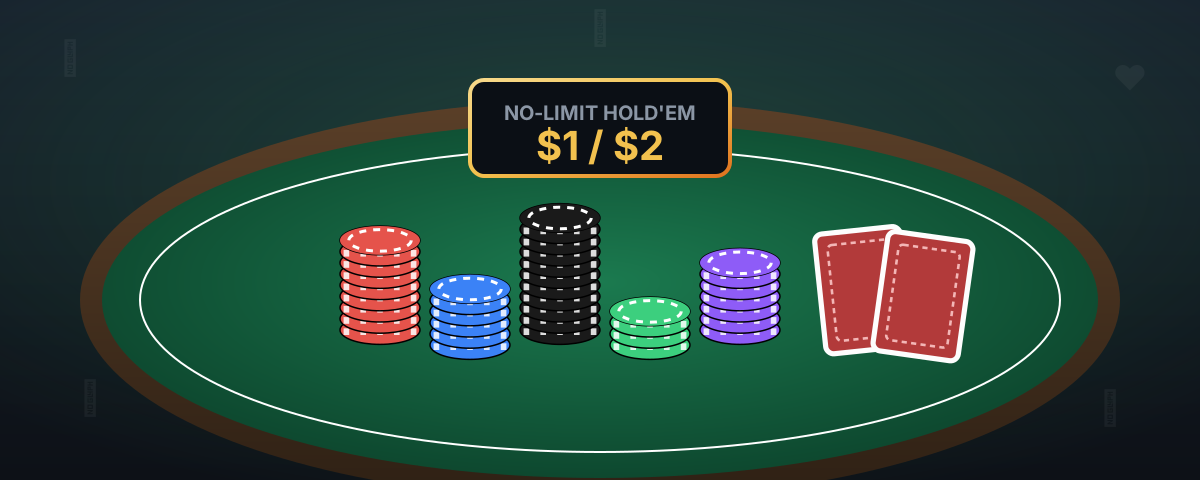
In a cash game (also called a ring game) the chips in front of you are worth exactly what you paid for them. You can sit down whenever there's a seat, buy more chips between hands, and get up and cash out at any time. The blinds never go up — a 1/2 game stays 1/2 all night.
How a cash game works
- Stakes are named after the blinds: "1/2" means a 1 small blind and 2 big blind; "5/10" is five times bigger.
- Buy-in: tables have a minimum and maximum buy-in, usually set in big blinds — commonly 40–100 bb, sometimes up to 200 bb or more in "deep" games.
- Table stakes: you can only bet what's on the table when the hand starts. You can't reach into your wallet in the middle of a hand. But you also can't be forced out of a pot for lack of money: you go all-in instead.
- Topping up: between hands you can add chips, up to the table maximum.
- Leaving: cash out whenever you like. Many card rooms don't let you leave and return to the same table with less than you left with for a set time ("ratholing" rules).
Table sizes
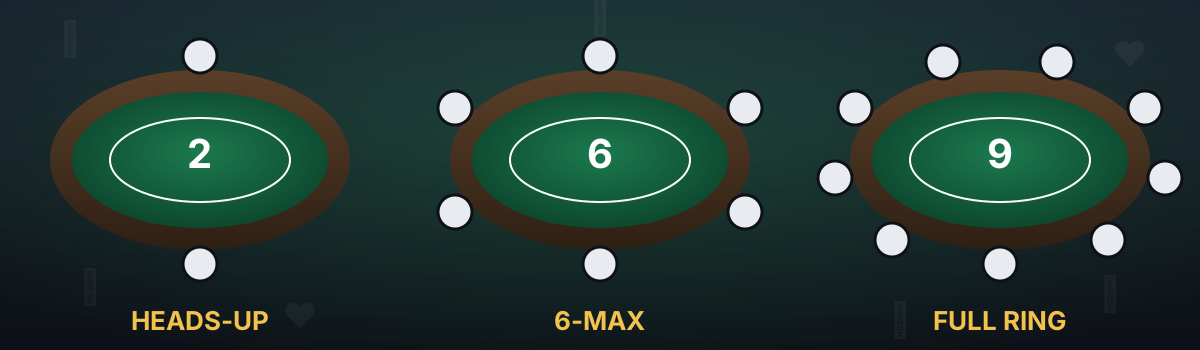
| Format | Players | What it's like |
|---|---|---|
| Full ring | 9–10 | The classic live table. Tighter play — with more players, someone is more likely to hold a strong hand. |
| 6-max | up to 6 | The standard online. More hands played, more action, more aggression. |
| Heads-up | 2 | One-on-one. You play almost every hand — pure skill and nerve. Try it against our AI legends. |
Rake: how the house gets paid
Card rooms and online sites charge for running the game, in one of two ways:
- Pot rake: a small percentage taken from each pot, usually with a cap per hand. Commonly no rake is taken if the hand ends before the flop ("no flop, no drop").
- Time charge: each player pays a fixed fee per half hour or hour instead — common at higher stakes.
Rake is the biggest cost of playing, especially at small stakes, so it's worth comparing between rooms.
Common extras in live cash games
Straddle
A voluntary blind, usually 2× the big blind, posted by the player under the gun before the cards are dealt. It doubles the stakes for that hand and the straddler acts last preflop.
Run it twice
When players are all-in before the river, they can agree to deal the remaining cards twice and split the pot between the two results. Same expected value, less luck.
Bomb pot
Everyone puts in an agreed amount, there's no preflop betting, and the hand goes straight to the flop. Often played with two boards.
High-hand bonus
Card-room promotions that pay out for very strong hands, such as four of a kind or better, or a "bad beat jackpot" when a huge hand loses.
Side games and bonuses like the 7-2 game and Squid Game are covered in More than Hold'em.
Live vs online
| Live | Online | |
|---|---|---|
| Hands per hour | About 25–35 | 60–100+ per table, and you can play several tables |
| Reading opponents | Physical tells, table talk, timing | Bet sizes, timing, statistics |
| Dealing | A dealer, or players taking turns at home | Automatic — no misdeals |
| Play style | Often looser and more passive at low stakes | Usually tighter and more aggressive |
How cash games differ from tournaments
- Chips are money. Every chip has the same value, so decisions are purely about winning the most chips on average.
- Deep stacks. Players are often 100 bb deep or more, so post-flop skill matters a lot.
- No pressure from rising blinds. You can wait for good spots — there's no clock forcing you to gamble.
- Flexible time. Play for 20 minutes or 8 hours. A tournament can't be left without giving up your chance at the prizes.
More on the other side: Tournaments.
Bankroll basics
Your bankroll is the money set aside only for poker. Because even good players have losing stretches, a common guideline is to have at least 20–30 full buy-ins for the stakes you play, and to move down if you drop below that. Never play with money you need for anything else.
Running a home game
A home game is a cash game (or a small tournament) among friends. A little preparation keeps it fun and friendly:
- Agree the format before anyone sits down: the game, the blinds, the buy-in (minimum and maximum), whether rebuys are allowed, and when the game ends.
- Choose a banker. One person sells chips, writes down every buy-in, and cashes everyone out at the end. Count the chips back against the notes before paying out.
- Use proper chips with clear values, and a dealer button. Rotate the deal clockwise each hand if there's no dedicated dealer.
- Write down the house rules — straddles, run-it-twice, how to handle a misdeal, showing cards — so arguments are settled before they start.
- Keep the pace up: shuffle the second deck while the first is being dealt, and keep pots and bets clearly in front of each player.
A simple chip setup for 8 players
| Chip colour | Value | Per player | Stack value |
|---|---|---|---|
| White | 1 | 10 | 10 |
| Red | 5 | 10 | 50 |
| Green | 25 | 4 | 100 |
| Black | 100 | 4 | 400 |
| Starting stack (e.g. at 2/4 blinds = 140 bb) | 560 | ||
A 500-chip set covers this for 8 players with spare chips for rebuys. Scale the values to whatever buy-in your group agrees on.
Popular home-game formats
- Dealer's choice: whoever deals picks the game — Hold'em, Omaha, Stud and more. See More than Hold'em for ideas.
- Home tournament: everyone pays the same, gets the same chips, and blinds rise every 15–20 minutes. See running a home tournament.
Frequently asked questions
What is the difference between a cash game and a tournament?
In a cash game the chips are real money, the blinds never go up, and you can join or leave whenever you like. In a tournament everyone pays the same buy-in, the blinds rise, and prizes go to the last players standing.
What does 1/2 mean in poker?
The size of the blinds: a $1 small blind and a $2 big blind. A 1/2 game is the most common entry-level stake in live poker rooms.
How much should I buy in for?
Most cash games let you buy in for 40 to 100 big blinds or more. Buying in for the full maximum (often 100 big blinds) is a good default.
What is rake in poker?
The fee the house takes to run the game: usually a small percentage of each pot with a cap, or a time charge paid every half hour.
What is a straddle?
An optional extra blind, normally twice the big blind, posted by the player under the gun before the deal. It doubles the stakes for that hand.
How do I run a poker home game?
Agree on stakes, buy-ins and house rules before you start, use a proper chip set, rotate the dealer button, and keep a written record of who bought in for what.