Poker world
Poker books that changed the game
From back-room memoirs to game-theory textbooks: the books that shaped how poker is played.
Last checked:
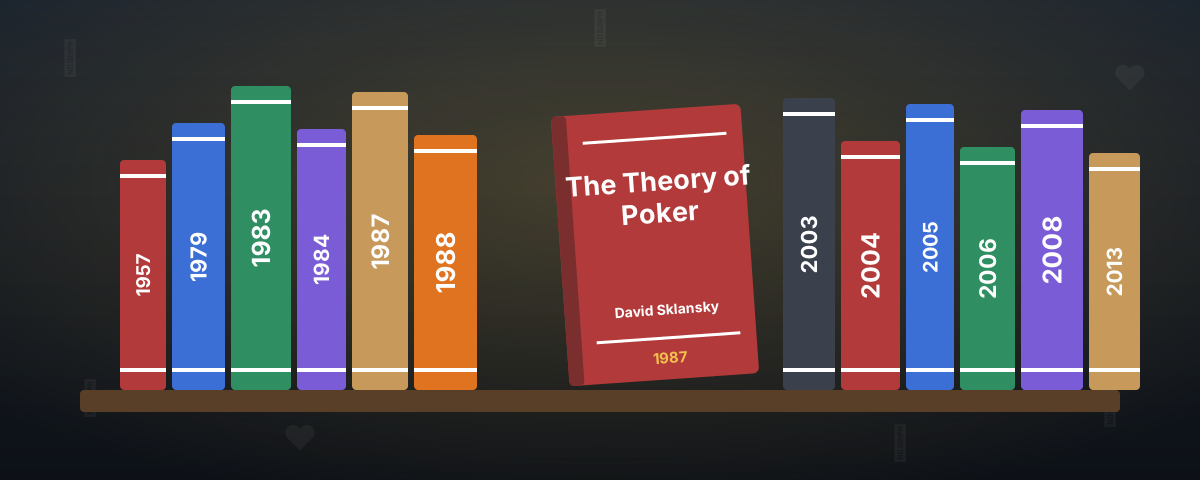
A handful of books changed how poker is played. Some gave away secrets that professionals had kept to themselves, some taught the mathematics behind every decision, and some told stories that brought new players to the game. Here they are, from 1957 to the solver era. See also our history of poker.
In short
- Most influential: Super/System (1979) and The Theory of Poker (1987).
- For tournaments: Harrington on Hold'em, then a solver-era book such as Modern Poker Theory.
- For anyone: The Biggest Bluff and Positively Fifth Street are great reads even if you never play.
At a glance
The classics
The books that turned poker from a gamble into a game people could study.
The Education of a Poker Player
1957 · Herbert O. YardleyPart memoir, part strategy guide from a former US code-breaker, with stories from the back rooms of small-town America and simple, practical advice for draw and stud poker.
Why it matters: One of the first popular poker books, and the one that inspired many later professionals to take the game seriously.
Super/System
1979 · Doyle Brunson, with Bobby Baldwin, Mike Caro, Chip Reese, David Sklansky and Joey HawthorneA world champion and a team of top players explain how they played every major game of the time, from draw and stud to No-Limit Hold'em. First self-published in 1978 under a different title.
Why it matters: Called the 'bible of poker'. It gave away aggressive No-Limit Hold'em strategy that professionals had kept to themselves.
Caro's Book of Poker Tells
1984 · Mike CaroA photo-illustrated guide to the body language of poker: what players' hands, faces and chip handling give away. First published as Mike Caro's Book of Tells.
Why it matters: Made 'tells' part of every poker player's vocabulary. Still the standard book on reading opponents at a live table.
The Theory of Poker
1987 · David SklanskyThe ideas behind every poker decision: pot odds, implied odds, semi-bluffing, deception and the Fundamental Theorem of Poker.
Why it matters: Gave players a way to think about poker as a game of mathematics and logic, not just guts and luck.
Hold'em Poker for Advanced Players
1988 · David Sklansky and Mason MalmuthA detailed guide to limit Hold'em, the main cash game of the time, including the famous starting-hand groups.
Why it matters: The standard Hold'em textbook for a generation of card-room players.
Tournament books
Written for the tournament boom, when millions of new players wanted to win a big event.
Harrington on Hold'em
2004 · Dan Harrington and Bill RobertieA multi-volume guide to No-Limit Hold'em tournaments by a former world champion, built around real hands and quizzes.
Why it matters: The tournament book of the poker boom. It made 'M', a way to measure your stack against the blinds, standard tournament thinking.
Every Hand Revealed
2008 · Gus HansenA famously aggressive pro explains every hand he played on the way to winning a major tournament, with his thinking for each one.
Why it matters: A rare look inside a winning tournament run, hand by hand, from one of the most creative players of the boom years.
Game theory and the solver era
From game theory on paper to solver-based study: how modern strategy was built.
The Mathematics of Poker
2006 · Bill Chen and Jerrod AnkenmanTwo mathematicians apply game theory to simplified poker games and show what unexploitable strategy looks like.
Why it matters: Brought game theory into mainstream poker study, years before solvers made it standard.
Applications of No-Limit Hold'em
2013 · Matthew JandaBuilds balanced No-Limit Hold'em strategy from game theory: ranges, bet sizes and frequencies on every street.
Why it matters: Taught a generation of online players to think in ranges and balance, just before solvers arrived.
Modern Poker Theory
2019 · Michael AcevedoA guide to No-Limit Hold'em based on solver output: pre-flop ranges, flop strategy and how to study with modern tools.
Why it matters: One of the first complete textbooks of the solver era.
Stories and big ideas
True stories and ideas from poker that reached readers far beyond the poker table.
The Biggest Game in Town
1983 · A. AlvarezA British poet and critic spends time with the high-stakes players of Las Vegas during the World Series of Poker.
Why it matters: Showed readers outside the gambling world that poker had its own culture and characters. A classic of poker writing.
Positively Fifth Street
2003 · James McManusA magazine writer sent to Las Vegas to cover a murder trial enters the 2000 World Series of Poker Main Event himself, and goes deep.
Why it matters: Arrived just as the poker boom began and brought tournament poker to a literary audience.
The Professor, the Banker, and the Suicide King
2005 · Michael CraigThe true story of a Texas banker who challenged a team of top professionals to heads-up Limit Hold'em at the highest stakes ever played.
Why it matters: Brought the world of nosebleed-stakes poker to a wide audience.
Thinking in Bets
2018 · Annie DukeA former professional explains how poker thinking helps with decisions under uncertainty, in business and in life.
Why it matters: Took poker ideas, like separating good decisions from good results, to a business audience.

The Biggest Bluff
2020 · Maria KonnikovaA psychologist with no poker experience learns the game from a world-class coach and reaches the professional circuit within a year.
Why it matters: A bestseller that introduced poker, and what it teaches about luck and skill, to many new readers.
Where to start
- New to poker: read our free Poker 101 first, then The Theory of Poker for the ideas behind good decisions.
- Tournament players: Harrington on Hold'em is still a great foundation; then move on to modern, solver-based books.
- Just curious: The Biggest Bluff or Positively Fifth Street are great reads even if you never play.
Frequently asked questions
What is the most influential poker book?
Two books are usually named: Super/System (1979), which gave away professional No-Limit Hold'em strategy, and The Theory of Poker (1987), which explained the mathematics and logic behind every decision.
What is the best poker book for beginners?
Learn the rules first (our Poker 101 is free), then read The Theory of Poker. Its ideas, such as pot odds and the Fundamental Theorem of Poker, apply to every game.
Are old poker books still useful?
The ideas in the classics, such as pot odds, tells and position, are still true. The detailed strategy has changed a lot since solvers arrived, so pair the classics with a modern book.
What poker book should I read if I don't play poker?
The Biggest Bluff by Maria Konnikova and Thinking in Bets by Annie Duke are written for general readers and use poker to explain luck, skill and decision-making.