Poker world
People & items
The dealer, the floor, the brush and the host, and the button, chips and cards: everything you'll meet in a poker room, explained.
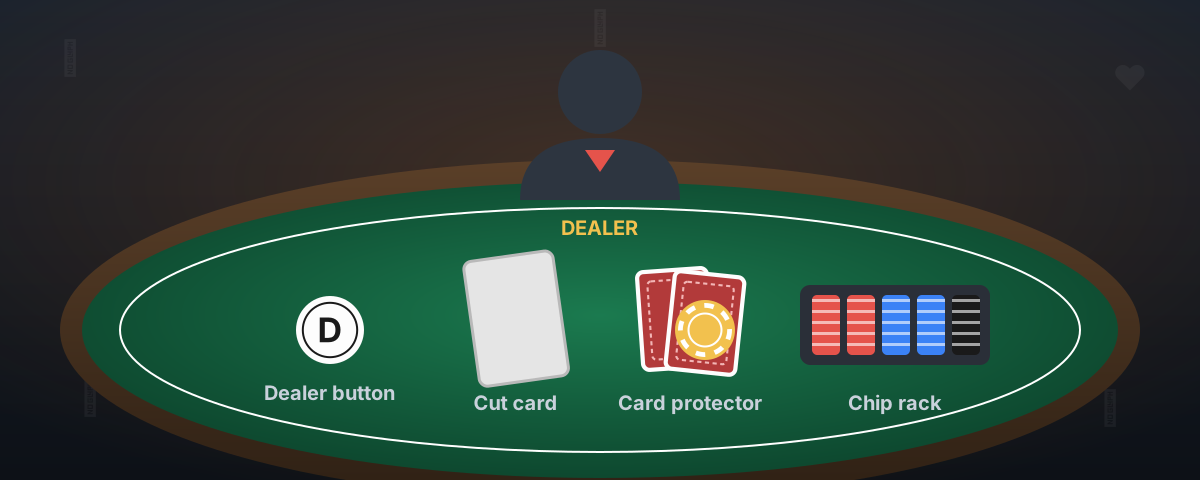
Walk into a poker room for the first time and you'll meet a whole cast of people and a table full of equipment. Here's who does what, and what everything on the table is for, so you can sit down and play like a regular.
In short
- The dealer runs the hand; the floor settles any problem. Call "Floor!" if something goes wrong.
- The brush puts you on the waitlist; the cage sells and cashes your chips (bring ID).
- Protect your cards with a chip or card protector, and act only when it is your turn.
The people in a poker room

Dealer
Runs the game at the table: shuffles, deals, moves the button, manages the pot and reads the hands at showdown. In most rooms dealers rotate tables every 20–30 minutes.
Tipping the dealer after you win a pot is customary in many countries (not in all).

Floor (floorperson)
The supervisor who settles disputes and rule questions. Call "Floor!" if something goes wrong at the table: a misdeal, an exposed card, a disagreement.
The floor's decision is final in that room. Most tournaments follow the TDA (Tournament Directors Association) rules.

Tournament director (TD)
Runs a tournament: the structure, the clock, seating, breaks, table balancing and the payouts.
Big festivals have a team of TDs and floors.

Poker room manager
In charge of the whole room: which games run, promotions, rake, staff and service.
Ask the manager about house rules, promotions and loyalty points.

Brush
Manages the waitlist and seats players as games open. The name comes from the old job of brushing the table clean.
Give the brush your name and the games you want; some rooms take waitlists by app.

Chip runner
Brings chips to your seat when you buy in or rebuy, so you don't have to leave the table.
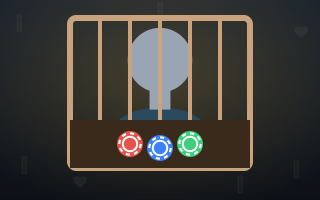
Cage cashier
Works at the cage, the room's bank, where you buy chips and cash them out.
Casinos ask for ID at the cage, so bring your passport when you travel.

Host (casino or VIP host)
Looks after regular and high-value players: room bookings, meals, event invitations and special requests.
If you visit often or play a festival, ask whether the room has a host.

Prop player
A player the room pays to help start and keep games running. They play with their own money.
Common in smaller card rooms.

Live reporter / streamer
Covers big events: chip counts, key hands and interviews, or broadcasts the game with hole cards on a delay.
Big hands at festivals often appear on PokerNews or the tour's own live updates.
The items on the table
Cards
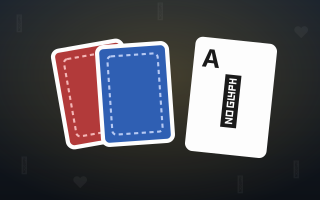
Poker rooms use 100% plastic cards that last much longer than paper ones. Many use "jumbo index" cards with big numbers that are easy to read from any seat, and some use four-colour decks.
Each table usually has two decks, swapped every hand or every dealer change. A "cut card" hides the bottom card of the deck.

Table
A poker table usually seats 9 or 10 players plus the dealer, with a padded "rail" around a felt playing surface, a betting line and the dealer's chip tray.
TV tables often have RFID readers under the felt so viewers can see hole cards.

Dealer button
The white disc that shows who is "on the button" (dealer position). It moves one seat to the left after every hand and decides who acts last after the flop.
See our guide to positions.

Blind buttons
Small markers for the small blind and big blind, used in some rooms to show who posts which blind.

"All-in" and "missed blind" buttons
Markers the dealer puts in front of a player who is all-in, or who must post a missed blind when they return to the game.

Chips
Casino chips are usually made of clay composite or ceramic, weigh about 8–11 g and are colour-coded by value. The colours and values differ from room to room, so check before you play.
Very high values come as rectangular "plaques". Tournament chips have no cash value.
Card protector
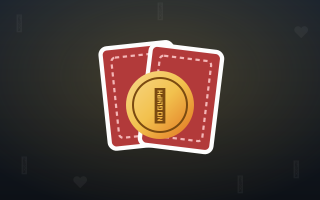
A small object, such as a coin, a chip or a lucky charm, placed on your cards so they can't be mucked by accident.
Players collect and show off their card protectors.

Automatic shuffler
A machine under or beside the table that shuffles one deck while the other is in play, so the game moves faster.
Used in many casino poker rooms.

Tournament clock
A screen that shows the current blinds and antes, the time left in the level, players remaining and the average stack.
Our game has one too: blinds rise every 5 minutes in Heads Up with Legends.

Chip rack
A plastic tray that holds 100 chips in five rows of 20, for carrying chips to the cage or between tables.
Quick etiquette
- Act in turn. Wait until it's your turn before folding, calling or raising.
- Say your action. Say "raise" before you put chips in, to avoid a string bet.
- Keep your cards on the table and protect them with a chip or card protector.
- Be kind to the dealer. Bad beats aren't their fault.
- Call the floor politely if there's a problem; don't argue with other players.
Frequently asked questions
What does the floor do in a poker room?
The floor (floorperson) is the supervisor who settles rule questions and disputes at the tables. Players call "Floor!" when something goes wrong, and the floor's decision is final in that room.
What is the dealer button?
A white disc that marks the dealer position. It moves one seat to the left after every hand; the player on the button acts last after the flop.
Should I tip the poker dealer?
In many countries, including the US, it is customary to tip the dealer a small amount when you win a pot. Customs differ, so follow what other players do in that room.
What are poker chips made of?
Casino chips are usually clay composite or ceramic and weigh about 8–11 grams. Colours and values differ from room to room.